Mount Kilimanjaro rises 5,895 metres above the Tanzanian plains — the highest free-standing mountain on Earth, and one of the few Seven Summits that can be climbed without technical equipment. Every year, around 50,000 trekkers attempt the summit. Of the seven established routes, one stands above the rest for scenery, acclimatization, and success rate: the Machame Route, affectionately known as the "Whiskey Route."
At Home of Wonders Tours, we have guided hundreds of climbers up Machame since 2014. This guide covers everything you need to know — the day-by-day itinerary, current 2026 pricing, difficulty, success rates, what to pack, and the small decisions that separate a summit from a turnaround. It is written by our own mountain team, not copied from a brochure.
Why Choose the Machame Route?
Machame is the most popular route on Kilimanjaro — and for good reason. It offers the best combination of scenery, acclimatization, and summit success of any route that does not require a full eight or nine days.
Key Advantages
- Stunning scenery — the route passes through five distinct ecological zones, from rainforest to alpine desert to the arctic summit zone.
- "Climb high, sleep low" profile — the trail ascends to Lava Tower (4,630m) on Day 4, then descends to Barranco Camp (3,976m) — a proven acclimatization pattern that dramatically improves summit odds.
- High success rate — around 85% with a 7-day itinerary and a strong operator, compared to roughly 65% on the 6-day version.
- Quieter than Marangu — no dormitory huts means fewer crowds on the trail and smaller camp sizes.
- Only route with the Barranco Wall — a famous scramble that many trekkers describe as the highlight of the entire climb.
Machame vs Marangu — A Quick Comparison
| Feature | Machame (7-day) | Marangu (5-day) |
|---|---|---|
| Accommodation | Tents | Dormitory huts |
| Scenery | Outstanding | Moderate |
| Acclimatization | Excellent | Weak |
| Summit success | ~85% | ~50% |
| Crowds | Moderate | High |
| Cost | Higher | Lower |
If you can spare the extra two days and the extra budget, Machame wins on almost every meaningful metric.
Machame Route at a Glance
| Detail | Information |
|---|---|
| Duration | 7 days (6 nights on the mountain) |
| Distance | ~62 km round trip |
| Starting point | Machame Gate (1,640m) |
| Ending point | Mweka Gate (1,640m) |
| Highest point | Uhuru Peak (5,895m) |
| Difficulty | Moderate to challenging (non-technical) |
| Traffic | High — the most popular route |
| Best months | January–March, June–October |
The 7-Day Machame Route Itinerary
Day 1: Machame Gate (1,640m) → Machame Camp (2,835m)
Distance: 11 km | Hiking time: 5–7 hours | Zone: Montane rainforest
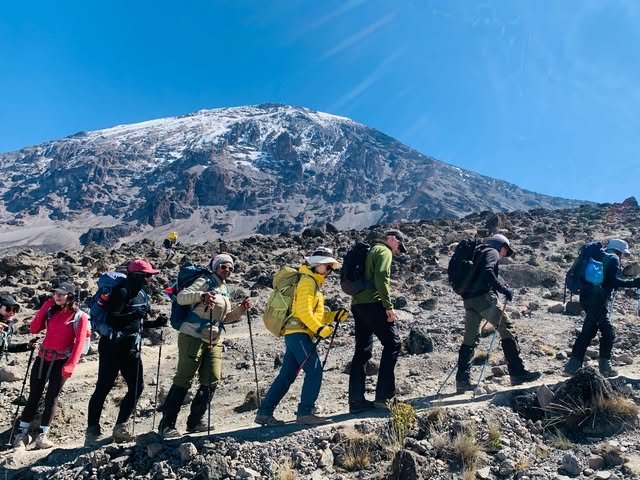
Your trek begins with a transfer from your Arusha or Moshi hotel to Machame Gate. After park formalities (which can take an hour on busy mornings), you enter the rainforest. The trail is wide and gentle, climbing steadily beneath towering camphor and fig trees. Colobus monkeys are frequently seen in the canopy.
You arrive at Machame Camp in the late afternoon. Your crew has already set up your tents, and hot washing water and tea await. The evening is cool and damp — a preview of the nights ahead.
Overnight: Machame Camp (2,835m)
Day 2: Machame Camp → Shira Camp (3,750m)
Distance: 5 km | Hiking time: 4–6 hours | Zone: Moorland
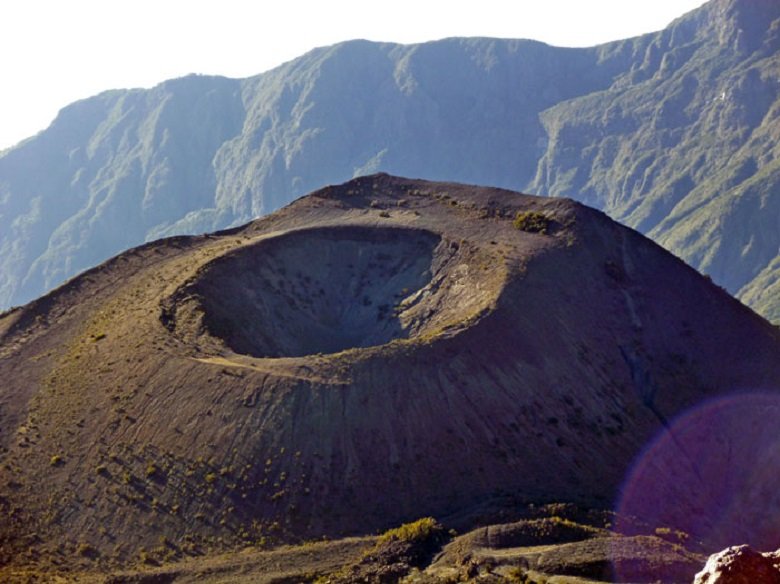
A shorter day in distance but a much steeper one. You leave the forest behind and enter the moorland, where giant heather and lobelia begin to appear. The trail climbs over a rocky ridge before opening onto the vast Shira Plateau — a collapsed volcanic crater that offers your first clear views of Kibo, Kilimanjaro's main peak.
The afternoon is spent resting at Shira Camp. Watch the sunset paint Kibo gold — it is one of the most memorable moments of the climb.
Overnight: Shira Camp (3,750m)
Day 3: Shira Camp → Lava Tower (4,630m) → Barranco Camp (3,976m)
Distance: 10 km | Hiking time: 6–8 hours | Zone: Alpine desert
This is the most important day of the climb for acclimatization. You climb to Lava Tower at 4,630 metres — the highest point most trekkers will reach before summit night — where you stop for lunch. Then you descend 650 metres to Barranco Camp.
This "climb high, sleep low" pattern forces your body to produce more red blood cells and is the single greatest reason Machame has a higher success rate than Marangu.
Overnight: Barranco Camp (3,976m)
Day 4: Barranco Camp → Barranco Wall → Karanga Camp (4,035m)
Distance: 5 km | Hiking time: 4–5 hours | Zone: Alpine desert
The morning begins with the Barranco Wall — a 300-metre scramble that looks terrifying from camp but is genuinely safe and enjoyable. The "kissing rock" move near the top has become a favourite photo spot for trekkers.
After the Wall, the trail rolls through a series of ridges and valleys before descending into Karanga Valley and climbing to Karanga Camp. The day is short, giving your body time to recover before summit night approaches.
Overnight: Karanga Camp (4,035m)
Day 5: Karanga Camp → Barafu Camp (4,673m)
Distance: 4 km | Hiking time: 4–5 hours | Zone: Alpine desert
A short but demanding climb to Barafu Camp — "Ice Camp" in Swahili. Barafu is the launch pad for the summit attempt. You arrive by early afternoon, eat an early dinner, and try to sleep despite the altitude and adrenaline.
Your guide will brief you on the summit plan: what time you wake, what to wear, how to pace yourself, and the signs of altitude sickness to watch for. Sleep comes in fragments, if at all — this is normal.
Overnight: Barafu Camp (4,673m)
Day 6: Barafu → Uhuru Peak (5,895m) → Mweka Camp (3,100m)
Distance: 17 km | Hiking time: 12–16 hours | Zone: Arctic → moorland
You are woken at around 11:00 PM. Hot tea, biscuits, and a few layers later, you set off into the dark at midnight. The climb to Stella Point (5,739m) takes 6–8 hours of slow, steady switchbacks over scree and rock.
At Stella Point, the gradient eases and the trail follows the crater rim. After another 45–60 minutes, you reach Uhuru Peak — 5,895 metres, the highest point in Africa. Sunrise from the summit is one of the most extraordinary sights on the planet: glaciers, the crater, the Rift Valley, and the plains spread thousands of metres below.
After 15–30 minutes on the summit (do not linger — the altitude is dangerous), you descend. The descent to Barafu takes 2–3 hours, then you continue down to Mweka Camp for a well-earned night of sleep at a far more comfortable altitude.
Overnight: Mweka Camp (3,100m)
Day 7: Mweka Camp → Mweka Gate (1,640m) → Moshi/Arusha
Distance: 10 km | Hiking time: 3–4 hours | Zone: Rainforest
A gentle descent through the rainforest to Mweka Gate, where you will receive your summit certificate. Trekkers who reached Stella Point receive a green certificate; those who reached Uhuru Peak receive a gold one. Transfers back to your hotel in Moshi or Arusha.
2026 Machame Route Cost: What You Should Expect
Pricing on Kilimanjaro varies hugely between operators — and this is where shortcuts get dangerous. Below is what a safe, licensed, well-equipped Machame trek actually costs to run.
Breakdown of Costs
| Component | Cost (USD) |
|---|---|
| Park fees (7 days) | $1,050–$1,200 |
| Rescue fee | $30 |
| Hut/camp fees | $350 |
| Guide, porters, cook wages | $450–$600 |
| Food & water | $150–$250 |
| Tents, gear, equipment | $100–$150 |
| Operator margin & insurance | $300–$500 |
Realistic Price Ranges
- Budget operators: $1,600–$2,000 — avoid these. They typically underpay porters, use poor gear, and cut safety corners.
- Mid-range operators (recommended): $2,200–$2,900 — fair porter wages, quality gear, strong guides, good food.
- Luxury / premium operators: $3,500–$5,000+ — private toilets, extra guides, gourmet meals.
At Home of Wonders Tours, our 7-day Machame Route starts at $2,450 per person** for a shared group departure and **$2,950 for a private climb. This includes all park fees, rescue fees, three meals a day, quality tents, professional guides, and the Kilimanjaro Porter Assistance Program wage floor — because a fair climb is a safe climb.

 Cookies Consent