
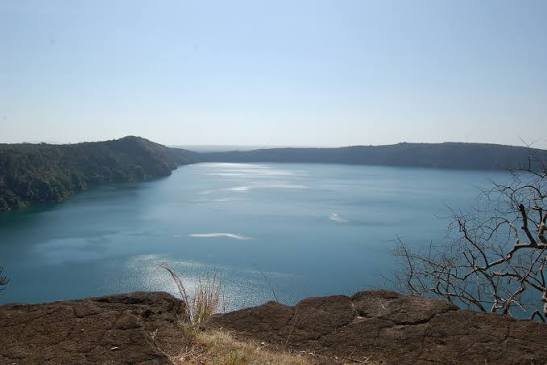
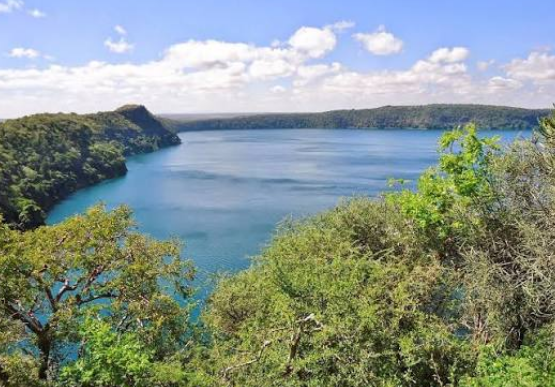
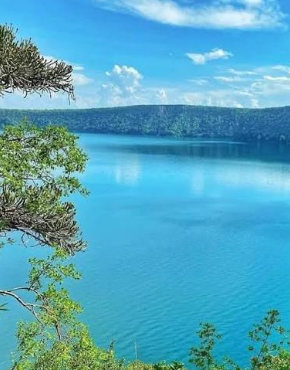
Lake Chala is one of Tanzania's most beautiful and mysterious natural wonders — a stunning volcanic crater lake sitting right on the Kenya–Tanzania border, just 55 kilometres from Moshi. Its waters are an almost unreal shade of turquoise and emerald green, and local legend says the lake is bottomless, fed by underground streams flowing from Mount Kilimanjaro itself.
Formed roughly 250,000 years ago by volcanic activity linked to the rifting of East Africa, Lake Chala is a steep-sided caldera lake with a surface area of about 4.2 km² and a depth of around 90 metres. Unlike most crater lakes, Chala is permanently stratified (meromictic) — meaning its layers of water never fully mix — which has made it one of the most important scientific sites in Africa for studying ancient climate change.
This 1-Day Lake Chala Tour with Home of Wonders Tours is the perfect escape for travellers looking for something quieter, more intimate, and more mysterious than a big wildlife safari. You'll hike the crater rim with its panoramic views across two countries, descend to the lake shore, spot wildlife and birdlife, and enjoy a picnic lunch overlooking one of Tanzania's most photogenic spots.
Lake Chala sits in a volcanic caldera on the lower south-eastern slopes of Mount Kilimanjaro, at an altitude of around 840–880 metres above sea level. The lake was formed when the magma chamber of a small volcano collapsed, leaving a steep-sided crater that filled with water over thousands of years.
What makes Chala truly unique is its stratification. Because the lake sits in a deep crater sheltered from wind, its water layers never fully mix. This meromictic condition means the bottom waters are anoxic (oxygen-free) — a rare phenomenon that preserves sediments and organisms in extraordinary detail.
For scientists, this has made Lake Chala a unique archive of environmental history. Sediment cores drilled from the lake bed have provided a continuous record of climate and environmental change spanning over 250,000 years — one of the longest such records anywhere in the tropics.
Lake Chala is not just a beautiful sight — it is also ecologically irreplaceable. The lake is home to the Lake Chala tilapia (Oreochromis hunteri), a species of fish found nowhere else on Earth and classified as Critically Endangered on the IUCN Red List.
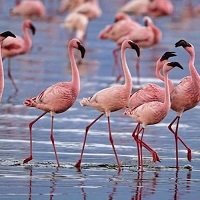
The lake also supports endemic freshwater crabs and a rich array of biodiversity. Its surrounding crater walls and forests are home to blue monkeys, colobus monkeys, baboons, dik-dik, kudu, and elephants, along with hundreds of butterfly and bird species, including the African Fish Eagle, Verreaux's Eagle, and Augur Buzzard.
Visiting Lake Chala is not just a day trip — it is a chance to see a living, breathing ecosystem that exists in only one place in the world.
One of the most common questions travellers ask about Lake Chala is: can you swim in it?
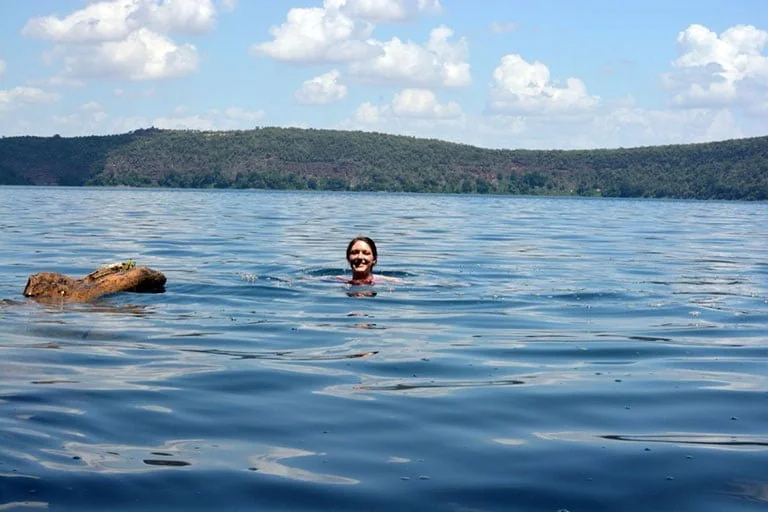
The short answer is: swimming is not recommended. Lake Chala is extremely deep right from the shoreline — the water drops off steeply, and the lake has strong, treacherous currents in places. There have been reports of crocodiles in the lake, and a fatal incident in 2002 involving a student.
That said, the lake is undeniably beautiful, and many visitors are tempted. If you are an experienced swimmer and conditions are calm, the local guides may allow a very brief dip in a shallow area near the shore — but this is entirely at your own risk. For most travellers, the better option is to enjoy the lake from the designated swimming viewpoint or take a kayak or canoe out onto the water, which is a much safer and just as rewarding way to experience the lake.
Beyond the lake itself, the surrounding crater rim and forest are alive with wildlife. On a typical day, you may spot blue monkeys, colobus monkeys, baboons, dik-dik, and kudu, and if you're lucky, an elephant passing through the area.
Birdwatchers are in for a treat — the crater walls are a prime spot for raptors, with regular sightings of the African Fish Eagle, Verreaux's Eagle, and Augur Buzzard, plus dozens of smaller species.
One of the most unique aspects of a Lake Chala visit is that you are standing on the border between Kenya and Tanzania. From the crater rim, you can look across the lake into Kenya — and on a clear day, the views stretch across the East African plains in both directions.
Price: From $634.00 / person
Your day begins with a hotel pickup from Moshi (7:30 AM) or Arusha (6:30 AM). You'll travel by private vehicle through the scenic countryside, passing Chagga villages, banana plantations, and dry savannah. The drive takes about 1.5 hours from Moshi and 3 hours from Arusha.
On arrival at Lake Chala, you'll meet your local guide and begin a guided hike along the crater rim. The trail circles part of the caldera and offers spectacular views straight down into the emerald waters below. Along the way, watch for monkeys, baboons, and colourful birds.
Descend to the lake shore for a closer look at the water's turquoise clarity. There is a designated swimming viewpoint where you can sit by the water, take photos, and — if you're an experienced swimmer and conditions allow — take a very brief dip in the shallows.
Enjoy a packed picnic lunch on the crater rim or at the lakeside camp, with panoramic views over the water and the distant Kenyan plains. Fresh fruit, sandwiches, and cold drinks are included.
After lunch, take a short guided nature walk around the camp area, or opt for a kayak or canoe paddle on the lake (small extra fee). Paddling on Lake Chala offers unmatched views of the surrounding crater walls and a chance to spot fish eagles, kingfishers, and monitor lizards.
In the late afternoon, you'll begin your return journey to Moshi (arriving around 5:30 PM) or Arusha (arriving around 7:00 PM).
24 HRS
07:00 AM - 06:00 PM
06:00 AM - 08:00 PM
Payment Accepted

 Cookies Consent
We use cookies to enhance your experience on our website. By continuing to browse, you agree to our use of cookies.